Goals
A smart habit tracker that connects daily actions to overarching life goals, powered by an AI assistant that finds hidden patterns in your progress.
Context

The Problem
Most goal-tracking apps treat objectives as a flat, disconnected list of chores. Users check things off but quickly lose sight of why they are doing them, leading to burnout. Additionally, they lack insight into what actually works—leaving users guessing about their own productivity patterns.
The Solution
I built a hierarchical goal-tracking system where every daily habit feeds into a larger life goal. I integrated an AI layer that analyzes daily check-ins to automatically identify behavioral patterns, providing actionable insights into what conditions lead to successful days.
Final Deliverables
- Full Web Application
- Authentication & Database System
- AI Pattern Analysis Engine
- Reusable UI Component Library
Process
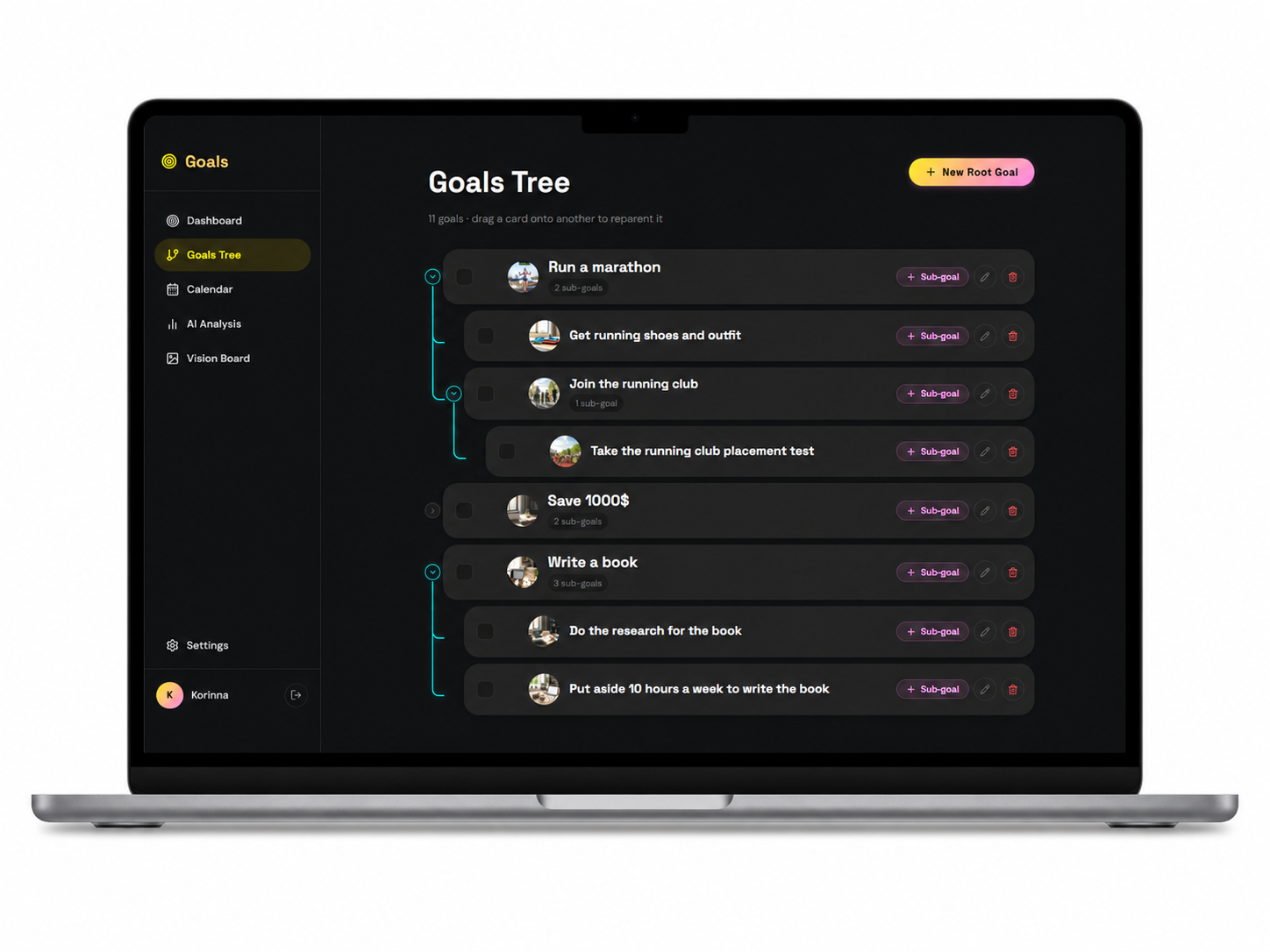
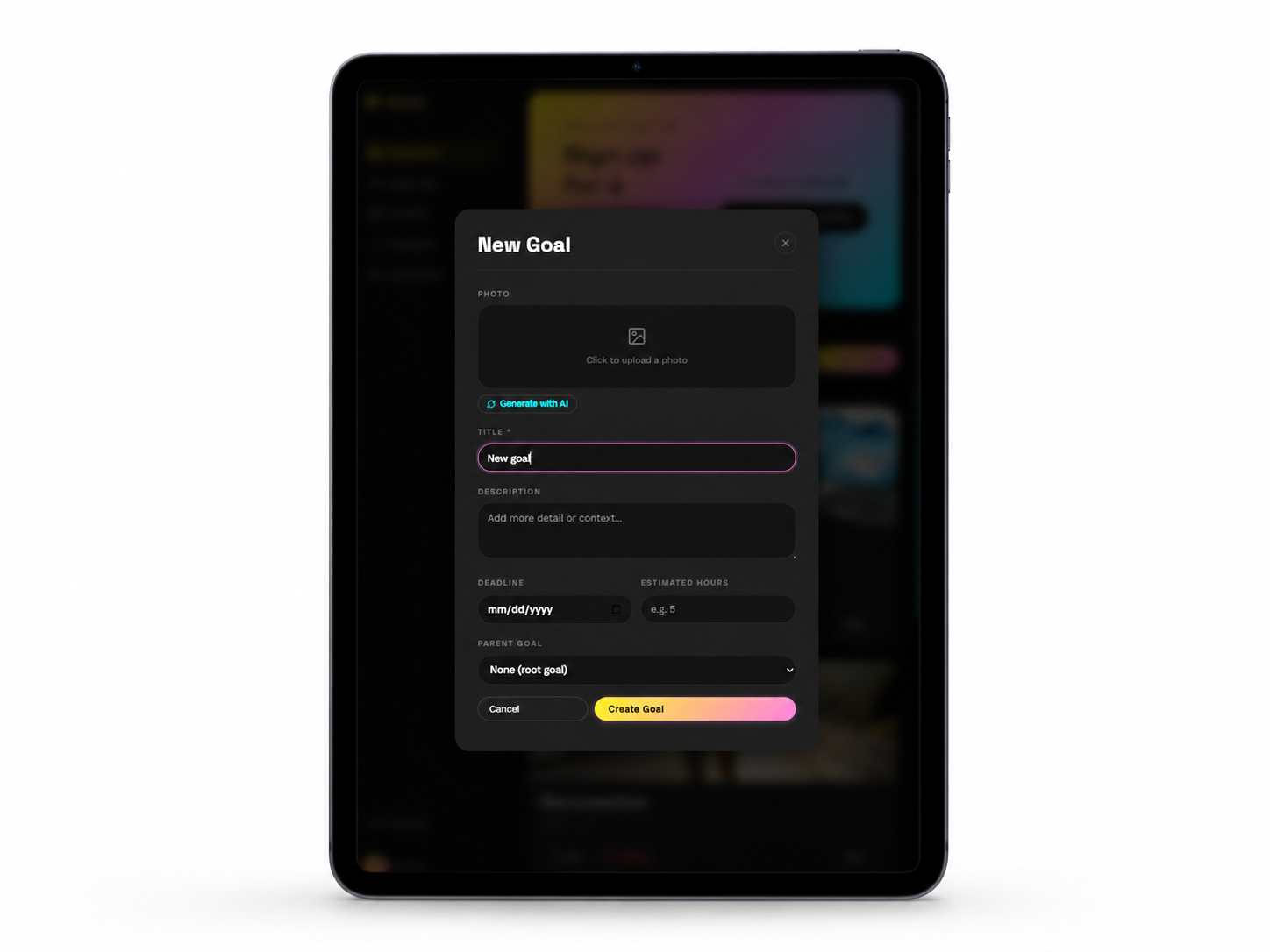
UX/UI: Hierarchical Goal Structure
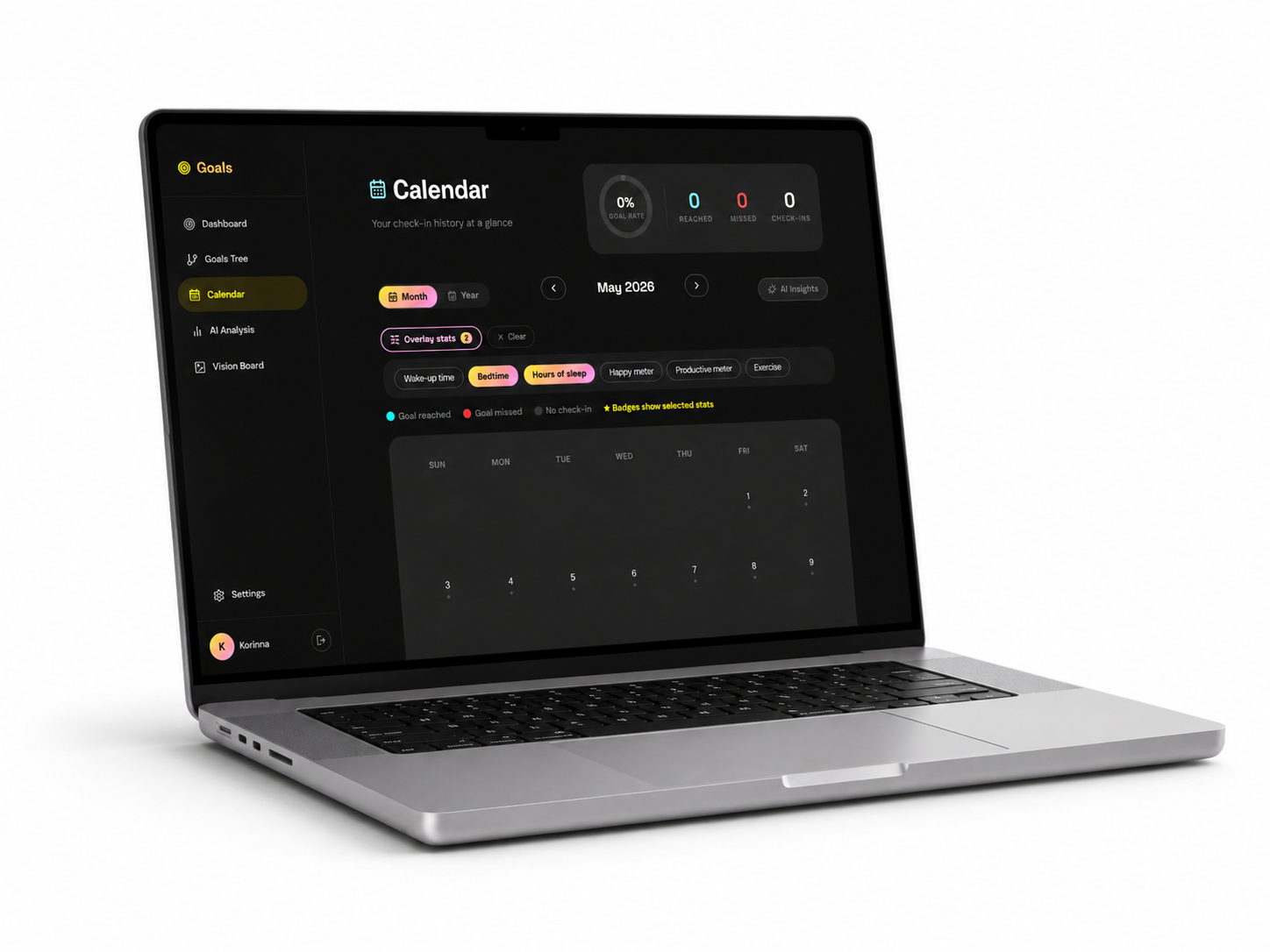
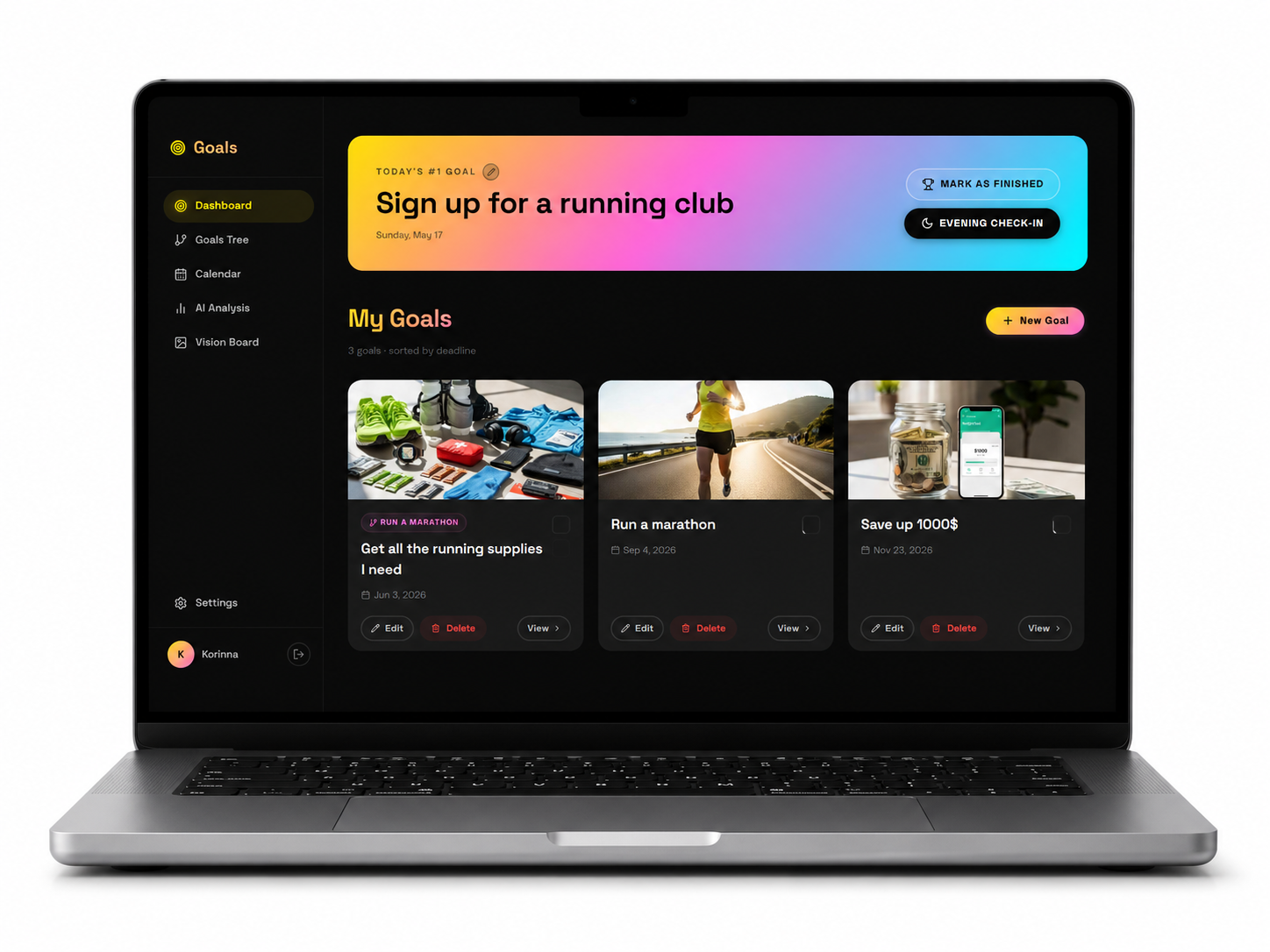
Design Decision: Instead of a flat list, the UI forces users to link small habits to parent goals. I used a clean, dark-mode premium aesthetic to keep the interface focused and distraction-free, emphasizing the hierarchy visually.
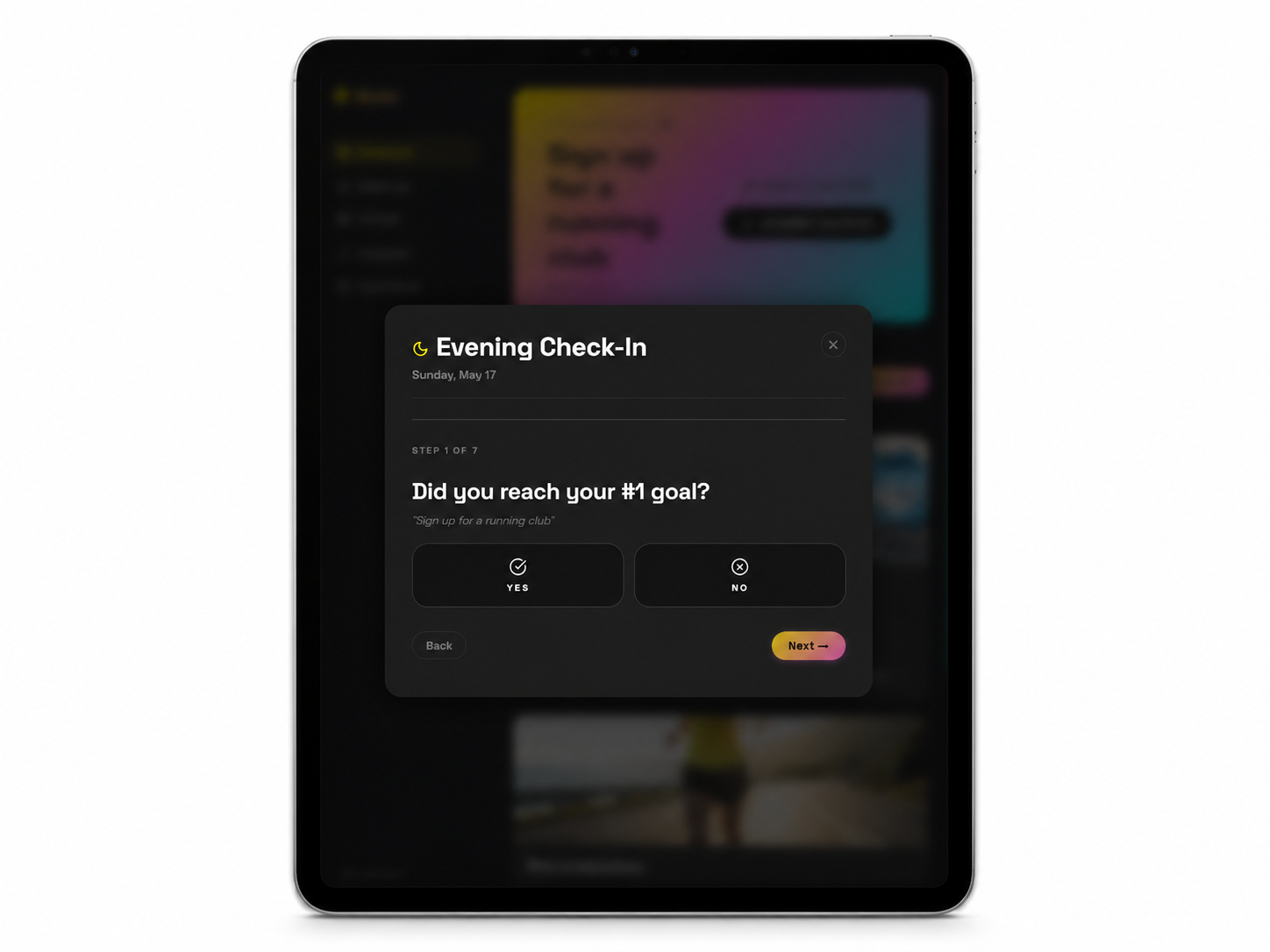
Development: Flexible Daily Check-Ins
Development: Built with React and Firebase, the app prompts a nightly reflection based on custom user questions. This dynamically generates a rich, structured dataset over time without feeling like a chore.
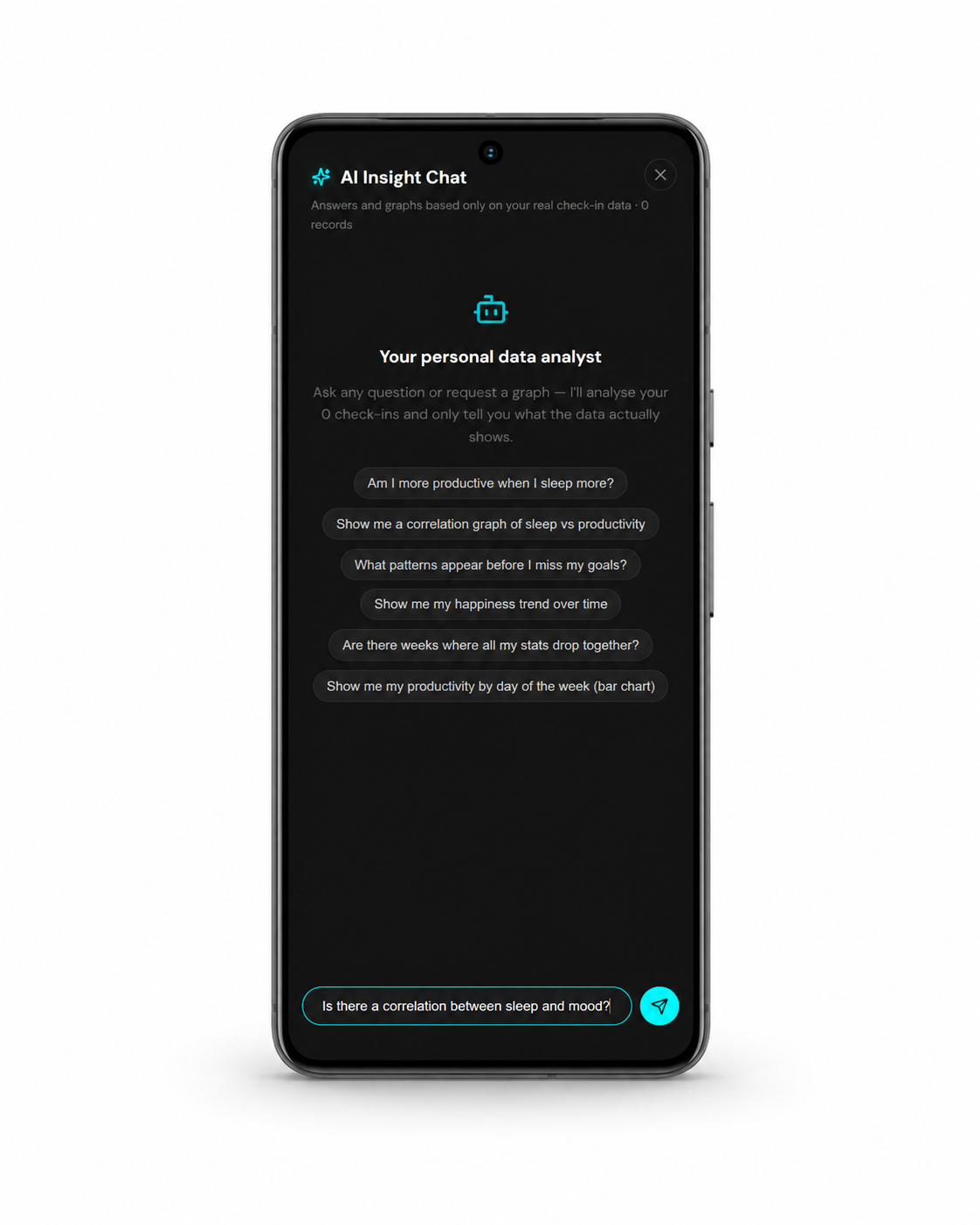
AI System: Contextual Analysis
AI Automation Logic: The user's historical check-in data is formatted and fed securely into the OpenAI API using a specialized prompt. The system is instructed to look for correlations (e.g., "Days you sleep 8 hours correlate with completing your coding habit") and returns structured, actionable insights rather than generic advice.
Technologies
Results
The Challenge
Challenge: The AI initially provided vague, horoscope-like advice that wasn't actionable because the check-in data was too unstructured.
Solution: I restructured the database to force binary and numeric inputs alongside text, and heavily refined the system prompt to enforce a strict "Observation -> Correlation -> Action" output format.
The Results
Impact: The resulting application successfully bridges the gap between passive tracking and active improvement.
- Fully deployed and functional web app
- Created a seamless, distraction-free design system
- Implemented a highly accurate AI pattern recognition feature
Gallery